
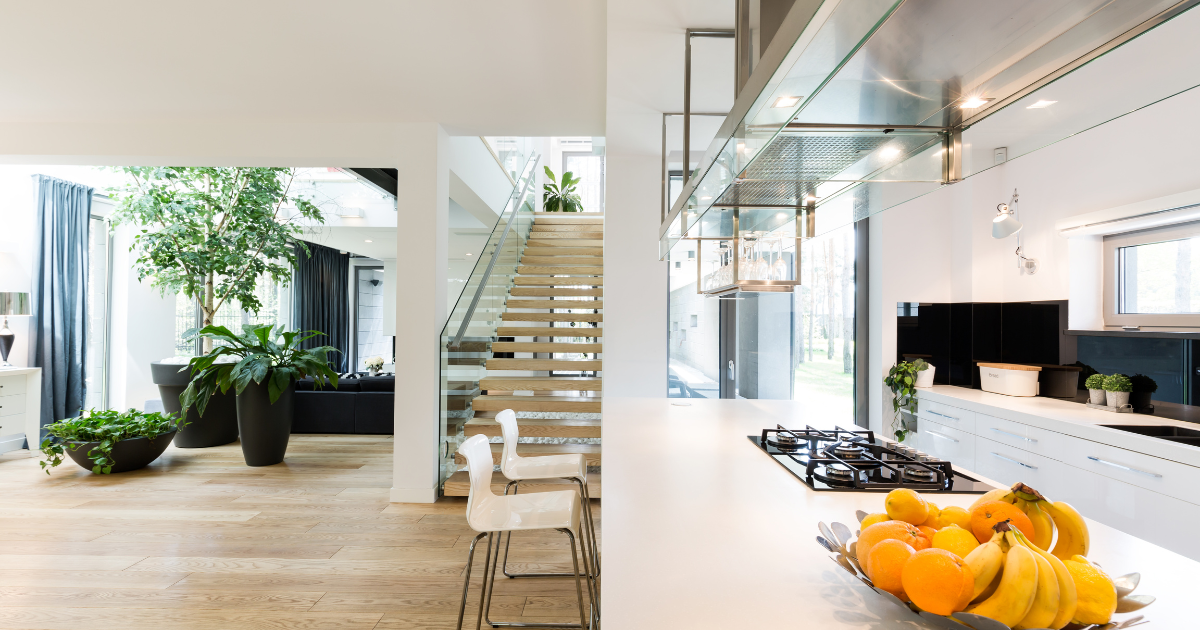
Broken plan living is a modern twist on the well-known open plan layout. While open plan design removes internal walls to create large, airy spaces, broken plan takes this idea further by introducing subtle separations within the same open area. Rather than completely dividing rooms, broken plan uses elements such as partial walls, glass partitions, shelving units or changes in floor level to create defined zones. The result is a home that feels open and connected but also provides a sense of purpose and separation within each area. It’s an ideal layout for homeowners who want the benefits of open plan living, such as space and light, without compromising on functionality or privacy.
Why Homeowners Are Moving Away from Open Plan
For years, open plan living has been popular for creating sociable, light-filled homes. However, many homeowners are beginning to notice the downsides of such wide-open layouts. Noise can travel easily between zones, making it difficult to concentrate or relax, particularly in busy family households. Heating and cooling large open spaces can also be less efficient, and the lack of clear boundaries can lead to a more cluttered feel. Broken plan living addresses these issues by reintroducing some structure to the layout. It allows spaces to be used more efficiently, whether that’s a quiet spot to work from home, a cosy corner to read, or a space for children to play without taking over the entire room. For many, it’s the best of both worlds.
Key Features of a Broken Plan Layout
One of the great things about broken plan living is the flexibility it offers. Design features that help create zones include half-height walls that separate spaces while maintaining sight lines, or glass partitions that allow light to flow through while dampening sound. Built-in furniture such as open shelving can act as a visual barrier between areas like the kitchen and the living room, while still keeping everything feeling connected. Changes in floor level or ceiling height, such as a sunken lounge or raised dining area, can also help define spaces without using solid walls. Even thoughtful use of lighting, colour schemes, or flooring materials can contribute to the broken plan effect, subtly signalling the change in function from one zone to the next.
How Broken Plan Living Works
At Cobbydale Construction, we’ve seen a growing number of clients embrace broken plan living as part of their home design projects. It works particularly well in extensions, where additional space can be clearly divided into cooking, dining and relaxing areas without feeling disconnected. In renovations, especially in older properties, broken plan layouts can retain original character while offering modern functionality. We often incorporate glazed doors, internal windows or open shelving to create flow without sacrificing separation.
Conversions, such as turning a garage into a home office or family room, also benefit from this approach. Rather than feeling like a standalone room, the converted space can be linked to the rest of the home through clever design choices while still serving its own purpose.
Is Broken Plan Right for Your Home?
If you love the idea of open plan but find it doesn’t quite work for your lifestyle, broken plan living could be the ideal solution. It’s particularly suited to busy households where people want to be together but also need moments of quiet or personal space. It works beautifully in homes of all sizes and styles and can be tailored to suit modern or traditional interiors. Whether you’re planning an extension, thinking of renovating, or converting an underused space, broken plan design could help you get more from your home.
If you’d like advice on how to incorporate this into your project, our team at Cobbydale Construction would be happy to help. If you’re based in or around Skipton, Ilkley, Silsden, or Keighley, get in touch today to discuss your project – we’d love to hear your ideas and help you with new ones too! Cobbydale Construction’s expertise can help bring your vision to life. Contact us today on 01535 653530 or use our contact form here.