
When planning an extension, the roof is one of the most important design decisions you will make. While its appearance will influence your choice, a roof can also affect the cost of the project, the amount of natural light entering your home and how the new space feels internally. Both flat and pitched roofs can work brilliantly for extensions, so understanding their advantages can help you decide which approach is right for your property.
Flat Roof Extensions
Flat roofs have become a popular choice for home extensions, particularly where homeowners want the new addition to create a contrast with an older or more traditional property. Their clean lines lend themselves well to contemporary designs, large glazed doors and open-plan kitchen and living spaces.
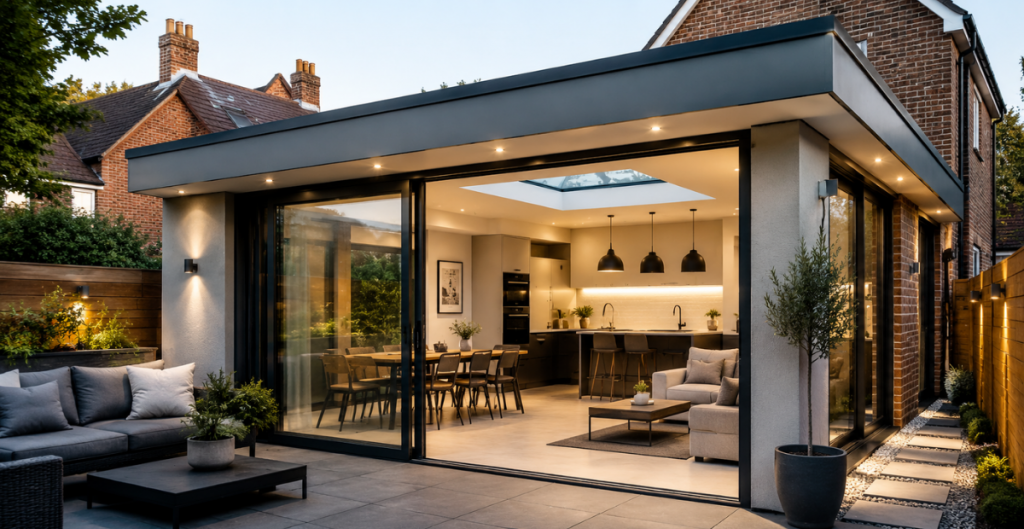
Despite the name, a flat roof is not completely level. It is constructed with a slight fall that allows rainwater to drain away effectively. Modern flat roofing systems also mean many of the problems historically associated with flat roofs can be avoided when the roof is properly designed, installed and maintained.
Flat roofs can accommodate rooflights or roof lanterns, helping bring daylight deep into an extension and the rooms beyond it. They are generally simpler to construct than pitched alternatives too, which can make them a more cost-effective option depending on the specification.
Pitched Roof Extensions
A pitched roof can be attractive when you want an extension to feel as though it belongs to the original property. Matching roof pitches, tiles and details can help a new extension blend sympathetically with traditional homes.
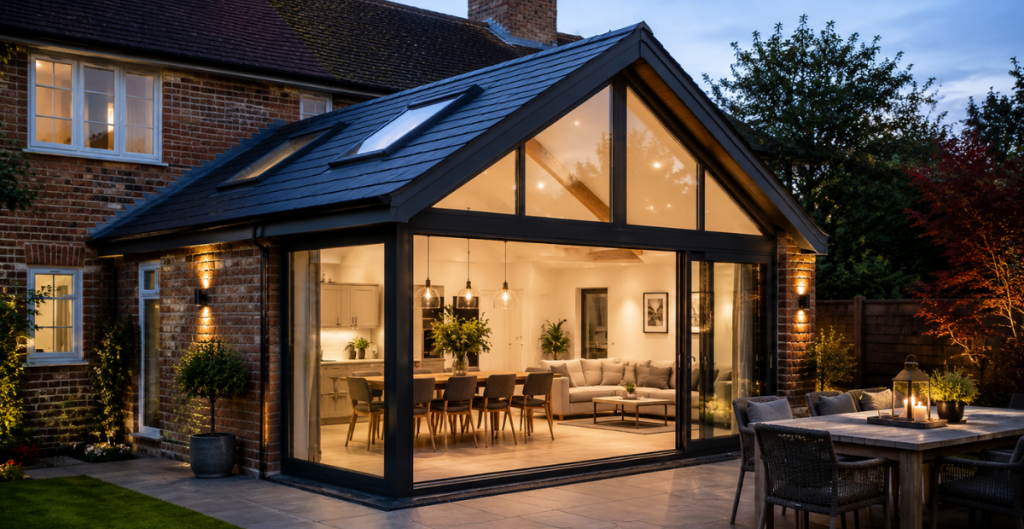
Their sloping design encourages rainwater to run off, while the roof structure can also create opportunities inside the extension. Rather than installing a conventional flat ceiling, for example, a vaulted ceiling can follow the roofline, creating additional height and making the room feel larger and more impressive. Rooflights can be incorporated into the slope to increase natural light.
The trade-off is that pitched roofs are typically more complex to construct. They can require additional materials, structural work and labour, potentially increasing the project cost. Their additional height may influence what is possible from a design or planning perspective.
How Do You Decide?
There is no single roof style that works best for every extension. Start by considering the architecture of your home and whether you want the extension to blend in or provide a contemporary contrast.
Budget, extension size, ceiling height, natural light and the position of neighbouring properties should all matter. Planning restrictions may influence the height and design available to you, particularly with certain properties or locations.
Think about the experience you want to create inside the finished extension. A dramatic vaulted ceiling might make a pitched roof worthwhile, whereas a sleek kitchen extension with rooflights and wide glazed doors may naturally suit a flat roof.
Final Thoughts
Choosing between a flat and pitched roof should be part of the wider design process rather than an isolated decision. Both options can create attractive, practical and long-lasting extensions when they are properly designed and constructed.
At Cobbydale Construction, we specialise in creating extensions, renovations, conversions and bespoke new builds designed around our customers and their properties. If you are considering extending your home and are unsure which roof style would work best, speak to our team about turning your ideas into a carefully considered finished space with confidence for many years to come. You can contact us today on 01535 653530 or use our contact form here.